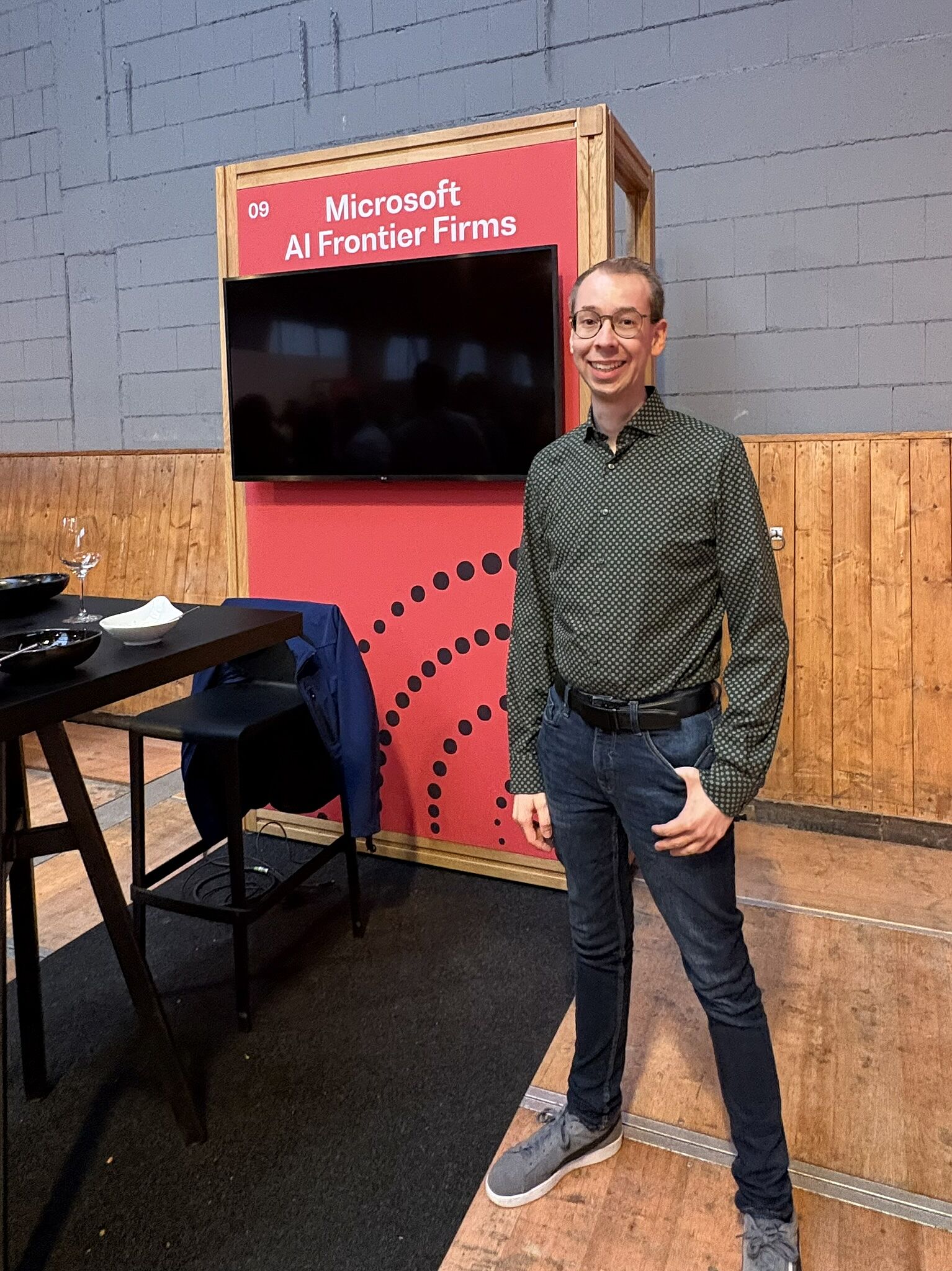
How Stefan turned his passion into a career
Stefan Kuhlemann studied Business Informatics at the Paderborn University Bachelor’s and Master’s at the University of Paderborn. Today, the 33-year-old works as an IT consultant at BearingPoint, developing digital solutions for businesses. Stepping into the world of work felt unfamiliar to him at first: after many years at university, he wondered what lay ahead for him outside the academic environment.
From enthusiasm to specialisation
Stefan had already been interested in Computer Science at school. He eventually found the right study programme for him in Business Informatics: “I was fascinated by the fact that it combines technical understanding with business processes.” It is precisely this interface that now shapes his day-to-day working life.
In 2012, Stefan deliberately chose to study at the University of Paderborn. As well as its proximity to where he lived, it was above all Paderborn’s excellent reputation in Business Informatics that won him over.
“During my studies, I met many teaching staff who clearly passed on their enthusiasm for the subject to the students. This enabled me to acquire a broad range of knowledge,” recalls the alumnus.
That interest deepened: during his Master’s degree, Stefan worked as a student assistant in the field of decision support and operations research; he later stayed on to pursue his PhD. This enabled him to delve deeply into complex issues and systematically develop solutions.
Experiencing a sense of community
Alongside his studies, Stefan was involved in the Business Informatics Students’ Council and organised events with other students. He still regards this time as very valuable: “During your studies, you often focus heavily on your own performance. It’s easy to forget how important good collaboration and genuine connections with other people are,” he reflects.
The experience of developing solutions as part of a team and building reliable relationships continues to shape him in his job.
A step into the unknown
After completing his PhD, he made the move into IT consultancy. For Stefan, starting his career at Fellowmind was, above all, a step into the unknown: whilst he was familiar with the academic environment through his degree and PhD, he had never worked in a real company before.
That initial uncertainty soon faded. With his first projects came a sense of routine: gathering requirements, understanding processes, developing solutions. “You settle into the role much faster than you might think,” he says, describing his first few months.
For him, it was methodological skills rather than specific subject knowledge that proved crucial: “During my studies, I learnt to familiarise myself with new topics and to solve complex problems in a structured way. That’s a huge advantage in this line of work.”
Developing digital solutions for businesses
Stefan currently works as an IT consultant in the field of customer relationship management systems. There, everything revolves around how businesses can improve their customer relationships through digital means. His day-to-day work is shaped by questions such as: What does a business need? What do the existing processes look like? Where are the problems?
Building on this, he and his team develop tailor-made digital solutions. He is particularly enthusiastic about the combination of analytical thinking, technical implementation and close collaboration with people. “Soft skills such as communication and teamwork are just as important in consulting as technical expertise. It’s precisely this combination that makes the job so exciting and varied for me,” explains Stefan.
Stefan’s tips for a successful start to your career
The alumnus advises using your degree as a period of exploration: “Look into as many subjects as possible and let your interests guide you.”
At the same time, he recommends gaining practical experience early on: “Combining theory with practice helps enormously in developing a feel for your future career. I didn’t really have that in mind back then and would definitely approach it differently today,” Stefan reflects.
His most important lesson, however, remains: “You don’t have to be able to do everything perfectly before you start. A lot of things only develop once you’re in the job.”
For him, one thing is certain: if you stay curious, seize opportunities and seek out dialogue with others, you’ll lay a particularly strong foundation for your future path.
Is that what you want too?
Discover the diversity of Business Administration and Economics in our Bachelor’s degree study programmes. Each study programme usually lasts six semesters and prepares you for a career or a Master’s degree.
More information
- on the Bachelor’s programme in Business Informatics
- about the Master’s programme in Business Informatics