Autonomous driving, connected mobility, increasing electrification: the automotive industry is changing. This makes it all the more important to support companies in integrating digital services into their business models and utilising the innovation potential of digital business processes. A consortium from science and industry worked for three years to develop solutions for the mobility sector. The result: a comprehensive transfer of knowledge and experience, concrete tools for practical use and a strengthened ecosystem for the mobility industry in Germany. The "DiSerHub" project, in which the FIR at RWTH Aachen University, Paderborn University with the Heinz Nixdorf Institute (HNI) and the SICP Software Innovation Campus, the Institute for Transfer and Continuing Education (TUCed), the Institute of Automotive Economics (IfA) and the Fraunhofer autoMOBILproduktion alliance worked together, has now been successfully completed. The result is a transformation hub that offers new models in the fields of production, sales, utilisation and recycling. The Federal Ministry for Economic Affairs and Energy (BMWE) sponsored the project with a total of around 3.7 million euros.
The aim of DiSerHub was to harness the potential of digitalisation, impart knowledge in a practical way and accelerate implementation in companies. "If digital services are to be fit for the future, they must bring real added value beyond their function - for users, the environment and the economy. This is exactly what DiSerHub makes possible: we build bridges between research and practice and promote a circular economy in which automobility is not only efficient, but also resource-saving and value-enhancing," says Prof Dr Wolfgang Boos, Managing Director of FIR. "We have not only developed theoretical concepts, but also demonstrated specific use cases and discussed them with the companies."
The project partners, who were supported by regional business associations, have achieved numerous milestones. The broad expertise in the consortium made it possible to prepare topics such as the digital twin, artificial intelligence (AI) in car dealerships or needs-based autonomous mobility in an application-oriented manner. This includes checklists, decision-making aids, digital tools and recommendations for action. In terms of content, the entire value chain is covered, from development and production to sales, utilisation and recycling. Practical examples in the form of blog posts, videos and podcasts as well as training programmes are freely accessible on the central knowledge platform www.diserhub.de.
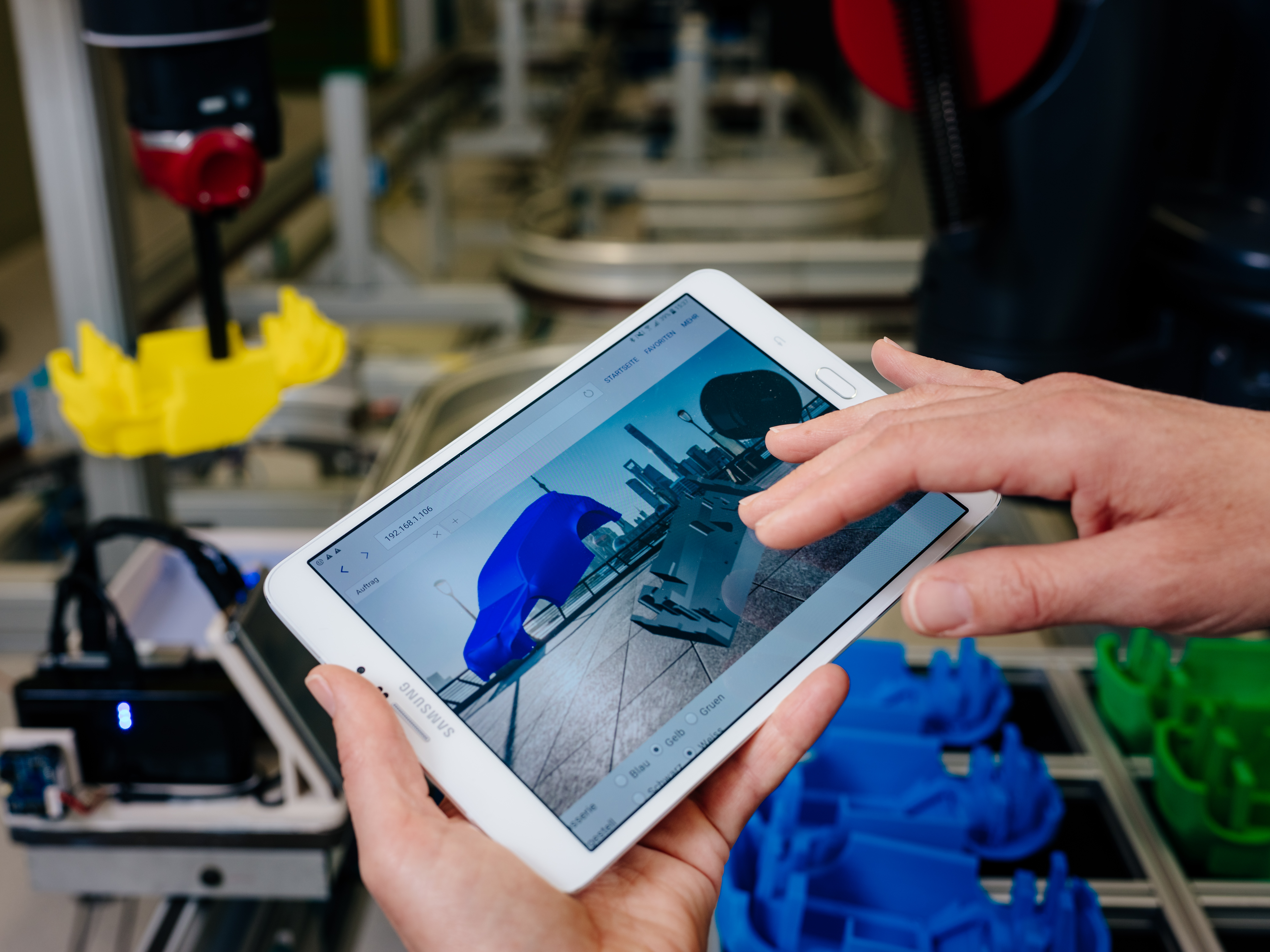
The Paderborn scientists focused on the development of sustainable, needs-based mobility services and practical demonstrators for connected and automated driving. Various demonstrators, including VR driving simulators, were set up in a real-world laboratory to bring the digital transformation in the mobility sector to life. This gave interested stakeholders the opportunity to try out Car2X communication, digital services and new business models in virtual reality. At the same time, demonstrators - such as a Lego environment for the NeMo.bil on-demand mobility system - provide the public with low-threshold access to topics such as connected driving, fleet management, operational planning, sector coupling, AI and technology acceptance.
"The close collaboration between the Heinz Nixdorf Institute and SICP has enabled us to cover a broad range of technologies. By setting up the joint demonstration environment, we can continue to make new developments in the mobility sector accessible to SMEs in the future," says Prof Dr Ansgar Trächtler from Paderborn University. The project team is well positioned for the future: A second project phase has already been approved by the ministry. It will start in January 2026, so the resulting network will continue to serve as a platform for dialogue and collaboration. The focus will then be on socio-technical challenges in the context of AI-based services such as fleet management for on-demand mobility. The demonstrators will be used to analyse the user acceptance of business models for highly automated vehicles in order to identify current barriers to market entry.