About the lecture:
Objectives can be formulated quickly, but organisational change takes more time. Strategies are often subject to a business logic comprising systems of objectives and catalogues of measures that set out a fixed framework. Sustainable change, on the other hand, acts as a catalyst within an organisation’s existing processes, which is why this approach has only limited effectiveness. Paderborn University has adopted its first sustainability strategy and is thus among the approximately forty per cent of German universities with such a strategy. It was developed through a participatory process and designed as a living document. A materiality analysis formed the starting point for twelve areas of action. Let us explore together what an alternative to the traditional approach might look like.
About the speaker:
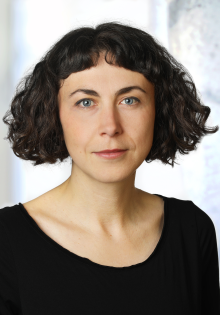
Friederike Häusler is an assistant in the Sustainability Office at Paderborn University and reports to Prof. Dr René Fahr, Vice-President for Transfer and Sustainability. She designed and oversaw the university’s materiality analysis, chairs the Sustainability Working Group, and is responsible for the development of the first sustainability strategy and its ongoing updates. She is also involved in regional sustainability projects in East Westphalia-Lippe. She sees sustainability as a framework for organisational decision-making that cuts across existing structures and gradually changes routines.
“UPB for Future” Lecture Series
For the seventh time, the Educational Innovation and University Didactics Office, in collaboration with Prof. Dr René Fahr’s research group, is organising a joint lecture series on sustainability during the winter semester 26/27. The lecture series is entitled “UPB for Future” and is aimed at students from all disciplines and at all stages of their studies, staff, and the interested public. In weekly lectures, the ecological, social and economic dimensions of sustainability will be explored and discussed.